Turkish food calories for travellers: what to log first
Turkish dishes can stay modest or climb fast, depending on bread, oil and dessert. Here are the Cal AI catalog values and the easiest way to log them on the trip.
Published Nov 25, 20268 min read1 views
In this guide
How many calories are in the Turkish dishes travellers see most often?
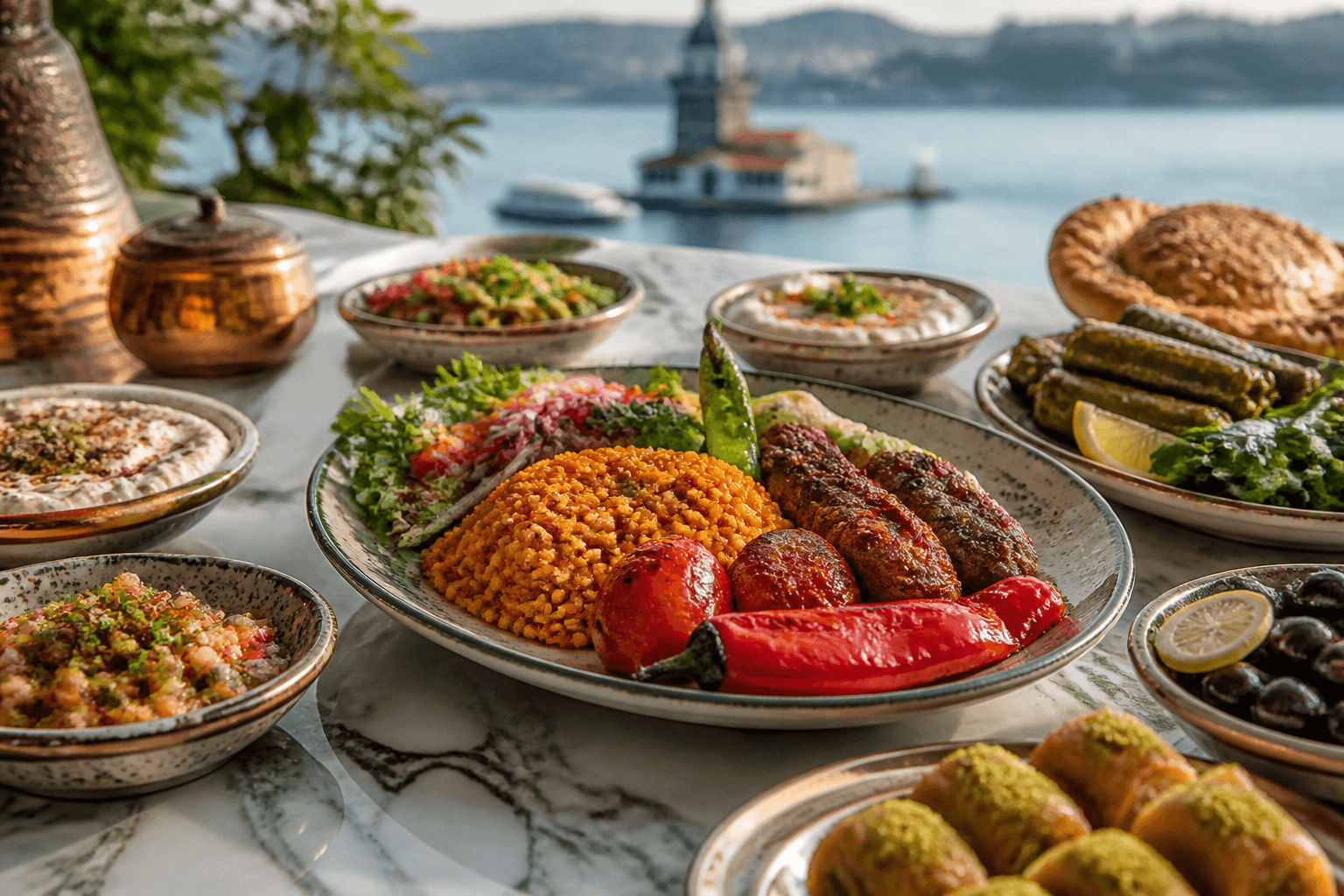
Turkish food calories are easiest to read when you start with the dish on the plate, then check the grams. A slice of Turkish Pide is 375 kcal, two Beef Kofta Kebabs are 500 kcal, one roll of Stuffed Grape Leaves is 80 kcal, and one piece of Baklava is 175 kcal.
This article is about the Cal AI app published by BeeStudio (calai.me). If you are pregnant, have a medical condition or a history of eating disorders, talk to a clinician before cutting calories.
| Portion | Grams | kcal | Protein | Carbs | Fat | % of 2,000 kcal day |
|---|---|---|---|---|---|---|
| Turkish Pide, 100 g | 100 g | 250 kcal | 10 g | 30 g | 10 g | 12.5% |
| Turkish Pide, 1 slice | 150 g | 375 kcal | 15 g | 45 g | 15 g | 18.8% |
| Beef Kofta Kebabs, 100 g | 100 g | 250 kcal | 22 g | 5 g | 17 g | 12.5% |
| Beef Kofta Kebabs, 2 kebabs | 200 g | 500 kcal | 44 g | 10 g | 34 g | 25% |
| Stuffed Grape Leaves, 100 g | 100 g | 160 kcal | 3.5 g | 30 g | 4.5 g | 8% |
| Stuffed Grape Leaves, 1 roll | 50 g | 80 kcal | 1.75 g | 15 g | 2.25 g | 4% |
| Baklava, 100 g | 100 g | 350 kcal | 9 g | 50 g | 18 g | 17.5% |
| Baklava, 1 piece | 50 g | 175 kcal | 4.5 g | 25 g | 9 g | 8.8% |
| Turkish Delight, 1 piece | 10 g | 35 kcal | 0 g | 8.7 g | 0 g | 1.8% |
A single slice of pide is already close to one-fifth of a 2,000 kcal day. Two kofta kebabs are about one-quarter of that day. A roll of grape leaves is small, but several rolls on a shared plate add up quickly. Baklava is the easiest dessert to undercount because one piece is denser than it looks. Turkish Delight is lighter per piece, so the count usually comes from how many pieces you take.
Which Turkish meal combinations stay light, and which add up fast?
A light lunch in a lokanta usually starts with soup, salad and one starchy side, not bread plus dessert plus a kebab plate. One bowl of Spiced Lentil Soup, the closest catalog entry to mercimek çorbası, is 315 kcal, one cup of Cucumber Tomato Salad is 75 kcal, one cup of Bulgur Wheat Pilaf is 214 kcal, and two tablespoons of Hummus are 50 kcal. Together that is 654 kcal if you eat all four items at those catalog portions. The same meal feels very different once you add a slice of Turkish Pide at 375 kcal.
A kebab dinner adds up faster because the meat, bread and oil all bring calories. Two Beef Kofta Kebabs are 500 kcal. Add one slice of pide and you are at 875 kcal before any sauce, meze or dessert. If the table brings baklava after that, one piece adds another 175 kcal.
The safer pattern is simple: soup, salad, one shared starter and one main. The faster pattern is bread on the side, meze in the middle and dessert after the main. Turkish Delight is the lighter sweet if you want something small; one piece is 35 kcal, while one piece of Baklava is 175 kcal. That is the difference between a small add-on and a second snack.
How do you log a shared meze table or a mixed kebab meal accurately?
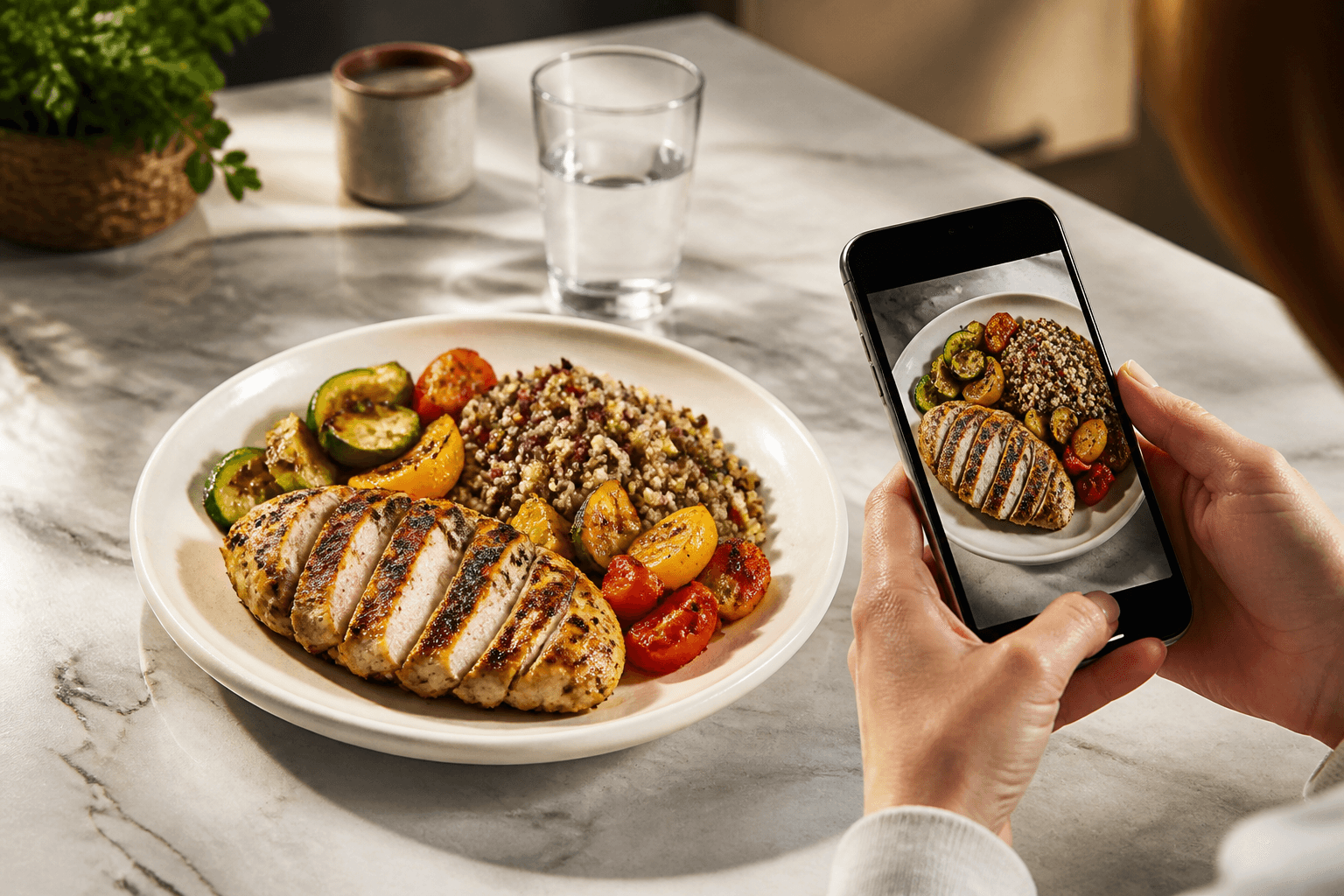
Log the plate, not the whole table. Take one photo of each shared dish, then edit the grams to your share. Cal AI estimates calories and macros from a meal photo, and you can correct grams and calories before saving. That matters with meze because most of the error is in portion size, not the food name.
Start with the item you can see best. For a shared table, separate the food into buckets: soup, salad, bread, protein, dessert. For Spiced Lentil Soup, one cup is 252 kcal, so half a cup is about 126 kcal. If you ate three stuffed grape leaves, that is 240 kcal at the catalog size of 50 g per roll.
If the meal includes both kofta and pide, log them as separate items instead of trying to force one photo into one estimate. Two kebabs are 500 kcal, and one slice of pide is 375 kcal. When you split them in the app, it is easier to correct the grams for the meat and the bread independently.
For desserts, log each piece as it is served. One piece of Baklava is 175 kcal, one piece of Turkish Delight is 35 kcal, and the difference is big enough that you should not guess from the plate size alone. If the dessert tray is mixed, log the pieces one by one rather than averaging the whole plate.
What should you do about cooking oil, butter, and restaurant portions you can’t see?
Add the hidden fat after you log the visible food. One tablespoon of olive oil adds roughly 124 kcal, and one tablespoon of butter adds roughly 100 kcal. You will not see that in a photo, so a grilled plate, pan-fried eggs or a glossy mezze dish can come in higher than the image suggests.
Use the photo estimate as the base, then correct upward when the dish looks oily, buttery or brushed. That is the cleanest way to handle restaurant food because the plate size often hides the real portion. If the food is served in a shallow pool of oil, assume the visible part is not the whole story.
Turkish restaurant servings also vary more than home portions. A “small” plate can still be enough for one person, and a “main” can be large enough for two. In those cases, the gram field matters more than the dish name. Set the grams to what you actually ate, not what the server brought.
How does Cal AI help you track Turkish food on the trip?
Cal AI is built for meal photos. It estimates calories and macros from the picture, lets you choose between recognition variants when the first result is off, and lets you edit grams and calories before you save the meal. It also keeps a day-by-day history and uses a daily calorie goal based on TDEE from Mifflin-St Jeor.
That makes it useful for Turkish meals because many of them are mixed plates. A photo of pide with meat, a shared meze spread or a dessert tray is faster to start with a scan than with manual typing. The app also supports manual entry, which does not use scans, so you can still log a meal when you do not want to photograph it.
For the wider routine of logging on a trip, see counting calories on holiday. One thing the app does not have is a searchable food database, so do not expect to browse a list of Turkish restaurant dishes inside it. For foods that are not in the catalog, use the photo scan or manual entry and then correct the grams. It also does not track weight or connect to Apple Health or Google Fit.
What’s the simplest way to stay connected for photo logging in Turkey?
Use data for scans and keep manual entry as the fallback. Cal AI’s photo scan sends the picture to the server for recognition, so it needs mobile data. Without a connection you can still log with manual entry, but the scan will not work until you are back online.
The easiest setup is to sort connectivity before you land, then test it on arrival. A Turkey eSIM from BeeSim gives you 5G data with nationwide coverage, and the plan starts when the eSIM first connects in Turkey. That means you can install it at home before the flight, keep your main SIM and your own number in the phone, and turn it on after landing.
BeeSim sells travel eSIM plans by total data or by GB per day, from 1 day up to 180 days. That matters on a food trip because photo logging uses small bursts of data, while manual entry works offline. If you land and the scan does not connect, log the meal with manual entry and fix the grams later if you need to.
A local Turkish SIM from Turkcell, Vodafone Turkey or Türk Telekom is a different case. Buying one usually requires a passport at the shop, and if a foreign phone stays on a Turkish SIM past 120 days it must be registered and taxed. A travel eSIM is a roaming profile, so those local SIM rules do not apply. If you are arriving late and need to log dinner the same night, set the eSIM up before you leave and keep the app ready for the first meal.
How do you keep dessert from becoming the biggest logging error?
Log desserts by piece, not by plate. Baklava is the main trap because one piece is 175 kcal, while one piece of Turkish Delight is 35 kcal. If the server brings both, count them separately.
This matters even more when the dessert comes after a heavy meal. A kebab plate with pide can already be 875 kcal. One piece of baklava pushes it higher fast, while Turkish Delight usually changes the total much less. When you cannot weigh the tray, use the piece count and then correct the grams after the scan.
Topics
Frequently asked questions
Can I log Turkish dishes in Cal AI if I only know the photo and not the grams?
Yes. Start with the photo scan, pick the closest recognition variant, then edit the grams to match what you actually ate. That is the quickest way to handle mixed plates and shared starters.
What should I do if the restaurant food looks oily but the photo estimate seems too low?
Raise the grams or add a cooking fat adjustment after you log the dish. A tablespoon of olive oil adds roughly 124 kcal, and a tablespoon of butter adds roughly 100 kcal, so hidden fat can change the total a lot.
Is manual entry enough if I do not have data in Turkey?
Yes for logging, because manual entry does not use scans. The photo scan itself needs mobile data, so manual entry is the fallback when you are offline or waiting to connect.
Why is baklava easier to undercount than Turkish Delight?
Baklava is denser, so one piece carries much more energy than a single piece of Turkish Delight. If the dessert tray is mixed, log each piece separately instead of estimating the plate as one average dessert.
Does Cal AI include a searchable Turkish food database?
No. The app is designed around meal photos, editable grams and calories, and manual entry. For foods that are not in the catalog, the photo scan and gram correction are the right tools.
Cal AI Editorial Team
Practical guides on nutrition, calorie tracking, meal planning, and building healthier habits with Cal AI.
Editorial policyRelated articles
- Cal AI
Does Cal AI Work in Russia and Other Countries?
Cal AI works where the App Store or Google Play is available, but billing stays in the store. This guide covers travel setup, languages, and common country traps.
Nov 25, 20266 min read
- Cal AI
Setting a Cal AI calorie goal: what TDEE means and how it works
Cal AI sets your daily calorie goal from TDEE, using the Mifflin-St Jeor formula. Here is what that means, where to check it, and how to fix a wrong estimate.
Nov 19, 20267 min read1 views
- cal ai vs yazio
Cal AI vs Yazio: calorie goals, logging speed, and what each does better
Cal AI is faster for photo-based logging, while Yazio is the safer pick if you want database search, tracker integrations, or weight tracking.
Nov 7, 20268 min read3 views
- Cal AI
Cal AI manual entry: log food without using a photo scan
Cal AI manual entry lets you add food without using a scan. Use the photo path only when it helps, then fix grams or calories yourself.
Nov 4, 20266 min read
- white rice
Calories in White Rice: Cup, Bowl, Restaurant Portion
Calories in white rice start at **130 kcal per 100 g**. See the cup, bowl, and restaurant portions, plus the quickest way to log rice in Cal AI.
Oct 30, 20267 min read4 views
- Cal AI
The scan got the dish wrong: how to fix grams and calories in Cal AI in 20 seconds
Fix a wrong Cal AI scan by choosing the closest recognition variant, correcting grams, and editing calories when the portion still looks off.
Oct 26, 20266 min read3 views