Calories in Chicken Breast: 100 g, One Breast, Grilled vs Fried
Chicken breast has 165 kcal per 100 g cooked. See one-breast calories, grilled and fried adjustments, and how to log it accurately.
Updated Oct 18, 20266 min read1 views
In this guide
Chicken breast has 165 kcal per 100 g cooked, so a 120 g small breast has 120 × 165/100 = 198 kcal.
From the Cal AI catalog, cooked chicken breast also has 31 g protein, 0 g carbs, and 3.6 g fat per 100 g. Use cooked weight for these numbers. If the chicken is fried, buttered, or served with a milk-based sauce, count the plain chicken first and then add the fat or sauce separately.
How many calories are in 100 g and one chicken breast?
The cleanest entry is cooked chicken breast by weight. The catalog page for chicken breast calories uses 165 kcal per 100 g, so every portion is grams × 165/100. Protein, carbs, and fat use the same gram-based method.
| Portion | Cooked grams | Calories | Protein | Carbs | Fat |
|---|---|---|---|---|---|
| 100 g cooked chicken breast | 100 g | 100 × 165/100 = 165 kcal | 100 × 31/100 = 31 g | 100 × 0/100 = 0 g | 100 × 3.6/100 = 3.6 g |
| Small breast | 120 g | 120 × 165/100 = 198 kcal | 120 × 31/100 = 37.2 g | 120 × 0/100 = 0 g | 120 × 3.6/100 = 4.3 g |
| Standard breast, weighed cooked | use your cooked grams | grams × 165/100 | grams × 31/100 | grams × 0/100 | grams × 3.6/100 |
| Large breast, weighed cooked | use your cooked grams | grams × 165/100 | grams × 31/100 | grams × 0/100 | grams × 3.6/100 |
That is about 8% of a 2,000 kcal day for 100 g, and about 10% of a 2,000 kcal day for a 120 g small breast.
The catalog gives a fixed small-breast serving at 120 g. It does not define a separate standard or large breast weight, because cooked chicken breasts vary. For those, weigh the cooked meat and use the formula in the table instead of guessing from the label “medium” or “large.”
Should I use raw or cooked weight for chicken breast?
Use cooked weight for this catalog entry. The number above is for cooked chicken breast, not raw chicken breast. If the piece is already on your plate, remove anything you are not eating, then log the cooked edible portion.
If the chicken is sliced, chopped, or part of a bowl, the same rule applies: count the cooked chicken you eat. Do not include rice, vegetables, dressing, or sauce in the chicken-breast entry. Log those separately if you have their amounts.
The easiest fix when your portion looks different from the catalog serving is to edit grams. For example, if your cooked breast is the catalog small serving, use 120 g and 198 kcal. If it is not, enter the cooked grams and let the calculation follow 165 kcal per 100 g.
Is grilled chicken breast lower calorie than fried chicken breast?
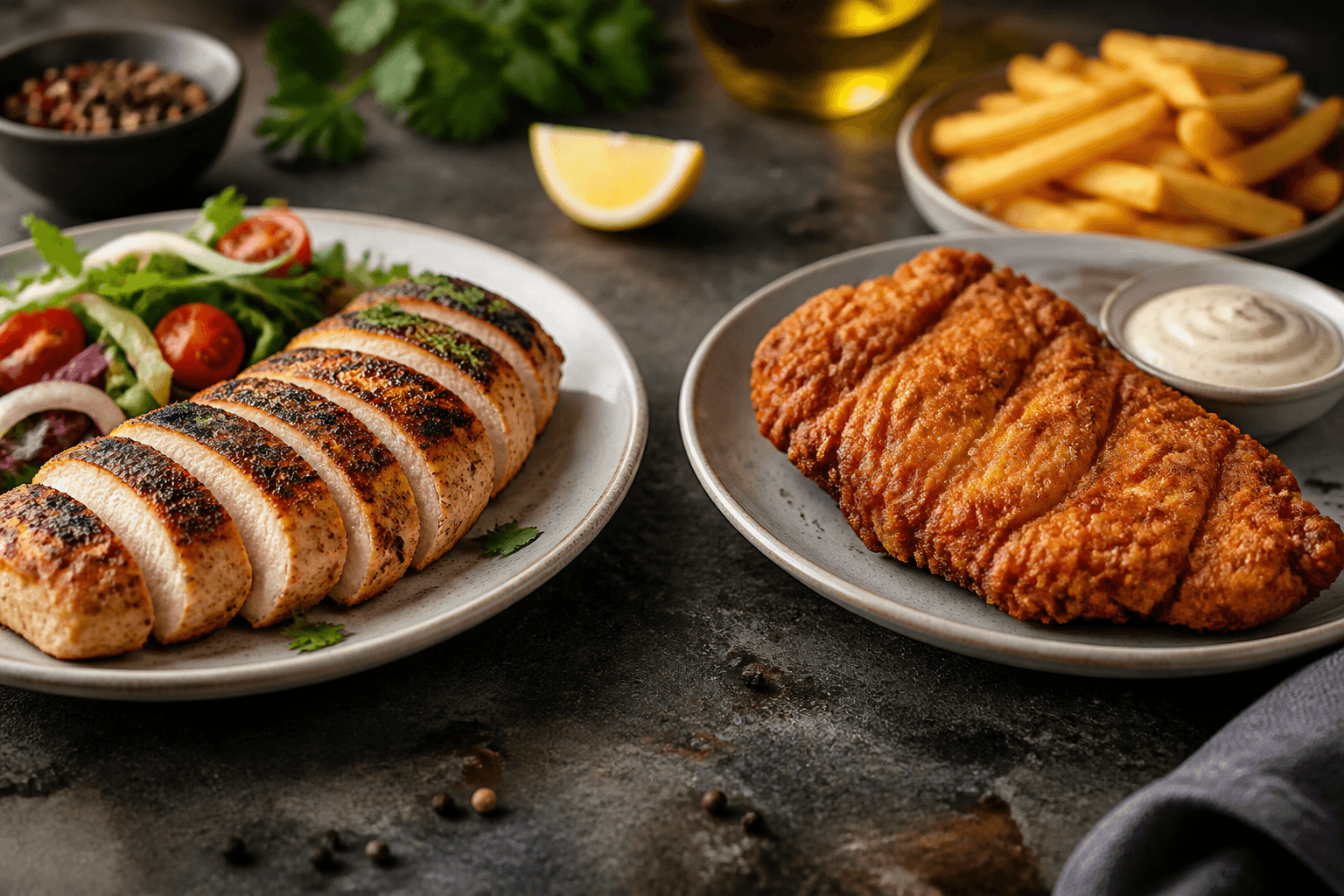
Plain grilled chicken breast uses the same catalog base: 165 kcal per 100 g cooked. The grilling method does not add calories by itself in this entry. The change comes from oil, butter, sauce, coating, or anything else that stays on the food.
For fried chicken breast without a separate breading value, count the plain chicken first, then add the cooking fat that was used and eaten:
- Olive oil: 1 tbsp is 14 g, so 14 × 884/100 = 124 kcal.
- Butter: 1 tbsp is 14 g, so 14 × 717/100 = 100 kcal.
- Whole milk sauce: 61 kcal per 100 ml of sauce base, before any other ingredients.
For a 120 g small chicken breast, the plain chicken is 198 kcal. If that serving includes 1 tbsp olive oil that you count as eaten, the total is 198 + 124 = 322 kcal. If it includes 1 tbsp butter, the total is 198 + 100 = 298 kcal. If it is served with 100 ml whole milk used in the sauce, count 198 + 61 = 259 kcal, plus any other ingredients you know.
The main logging mistake is counting the chicken as plain when the visible calories are in the pan sauce or fat. If oil remains in the pan, do not automatically count all of it. If the oil is on the plate or absorbed into the coating, add it.
How do I log chicken breast in Cal AI?
This article is about the Cal AI app published by BeeStudio at calai.me, not another app with the same name.
To log the plate, take a photo, choose the recognition variant that best matches cooked chicken breast, then correct the grams. If the scan finds a fried or sauced-looking variant but your plate is plain grilled chicken, pick the plain cooked-chicken option and adjust the weight. If the scan picks plain chicken but there is oil, butter, or sauce, edit calories or add the extra amount using the calculations above.
Cal AI lets you edit grams and calories after the scan. That matters here because chicken breast size varies a lot once cooked, and the difference between a 100 g portion and the 120 g catalog small breast is 33 kcal. Use the photo for recognition, but use grams for accuracy.
You can also use manual entry without a scan. That is useful when the chicken is packed for lunch, already weighed, or mixed into a meal where the camera cannot see the actual amount. The app keeps a day-by-day history, so a corrected chicken entry stays visible in that day’s log.
Cal AI also shows a daily calorie goal based on TDEE using the Mifflin-St Jeor formula. If you are pregnant, have a medical condition, or have a history of an eating disorder, talk to a clinician before cutting calories.
When should I edit grams, and when should I edit calories?
Edit grams when the chicken itself is bigger or smaller than the catalog portion. If your cooked breast is plain and you know the weight, grams are the right field: calories, protein, carbs, and fat all scale from the 100 g catalog value.
Edit calories when the chicken entry is correct but the preparation adds calories outside the plain cooked-breast value. Oil, butter, and milk-based sauce are the clear cases from this catalog set. A 120 g small breast stays 198 kcal as chicken; the tablespoon of oil or butter is an add-on.
If you are comparing chicken breast with another food, use the same cooked-weight basis so the comparison is fair. The food comparison tool is most useful when both foods are entered by the same type of portion.
What if the chicken is breaded, sauced, or mixed into another meal?
Do not force breaded or sauced chicken into the plain chicken-breast number. The 165 kcal per 100 g value covers cooked chicken breast itself. It does not include breading, frying oil, creamy sauce, cheese, or sides.
For a simple plate, log the chicken breast by cooked grams, then add the oil, butter, or whole milk amount you can identify. For a mixed dish, use the best visible scan result, then correct the grams and calories rather than accepting a photo estimate that treats the whole portion as plain chicken.
If you are setting a target for the day before you eat, use the calorie calculators and then log the cooked chicken by grams when the meal is ready. The final useful check is simple: if the plate looks glossy, buttered, or sauced, the plain chicken number is only the starting point.
Topics
Frequently asked questions
How many calories are in half a 120 g small chicken breast?
Half of the catalog small breast is 60 g. Using 165 kcal per 100 g, that is 60 × 165/100 = 99 kcal.
Does Cal AI have a searchable food database for chicken breast?
No. The app does not include a searchable food database; use a photo scan or manual entry, then edit grams and calories.
Can Cal AI sync chicken breast calories to Apple Health or Google Fit?
No. Cal AI does not have fitness-tracker, Apple Health, or Google Fit integration.
Does Cal AI track body weight along with chicken breast logs?
No. The app has day-by-day calorie history, but it does not include weight tracking.
How many scans are included with Cal AI Premium?
Premium includes 200 scans per month and is bought only through the App Store or Google Play. Manual entry does not use scans.
Cal AI Editorial Team
Practical guides on nutrition, calorie tracking, meal planning, and building healthier habits with Cal AI.
Editorial policyRelated articles
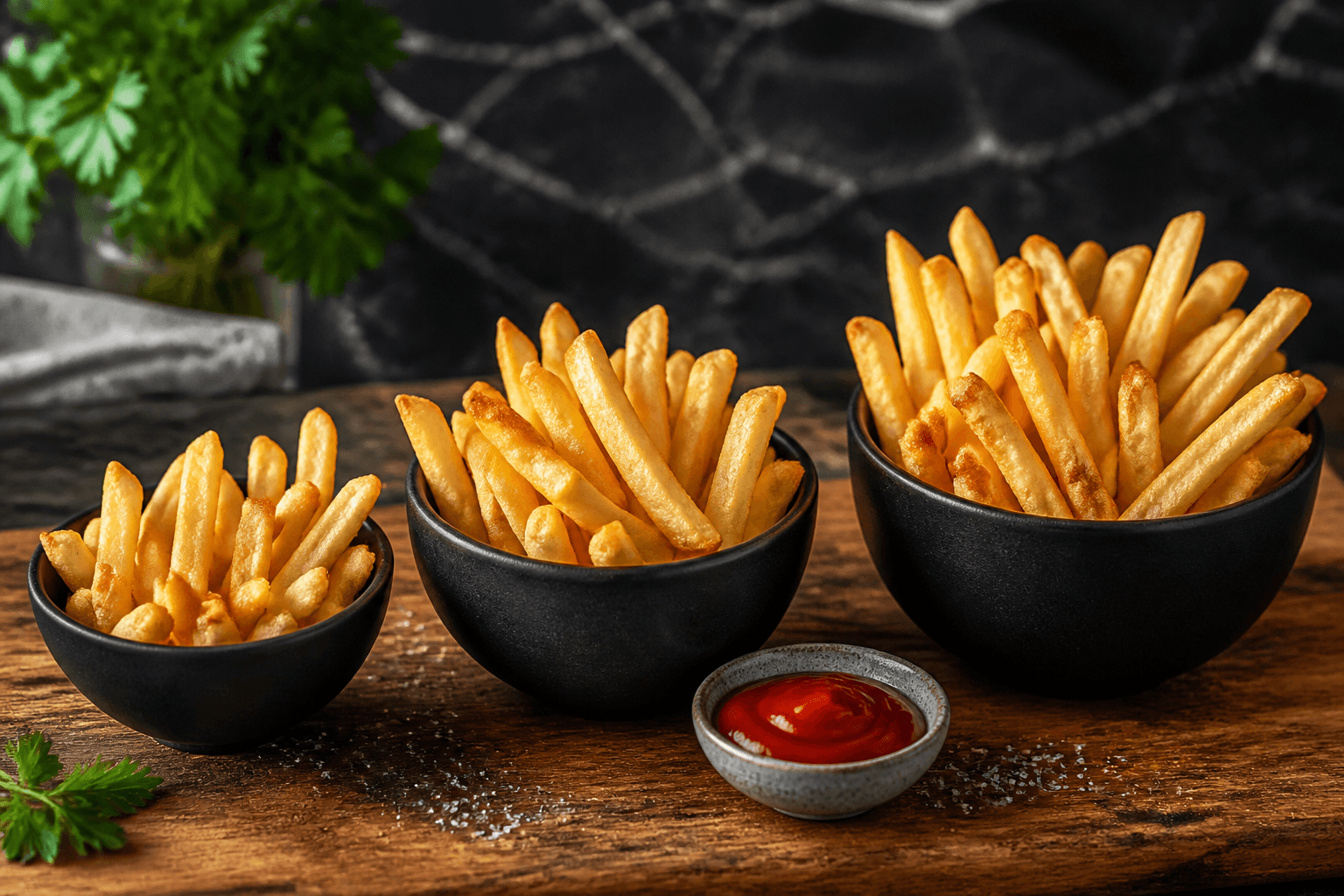
- french fries
Calories in French Fries: Small, Medium and Large Portions
French fries are 312 kcal per 100 g, and a standard 117 g serving is 365 kcal. Use grams, not size names, when the portion looks unclear.
Oct 23, 20266 min read
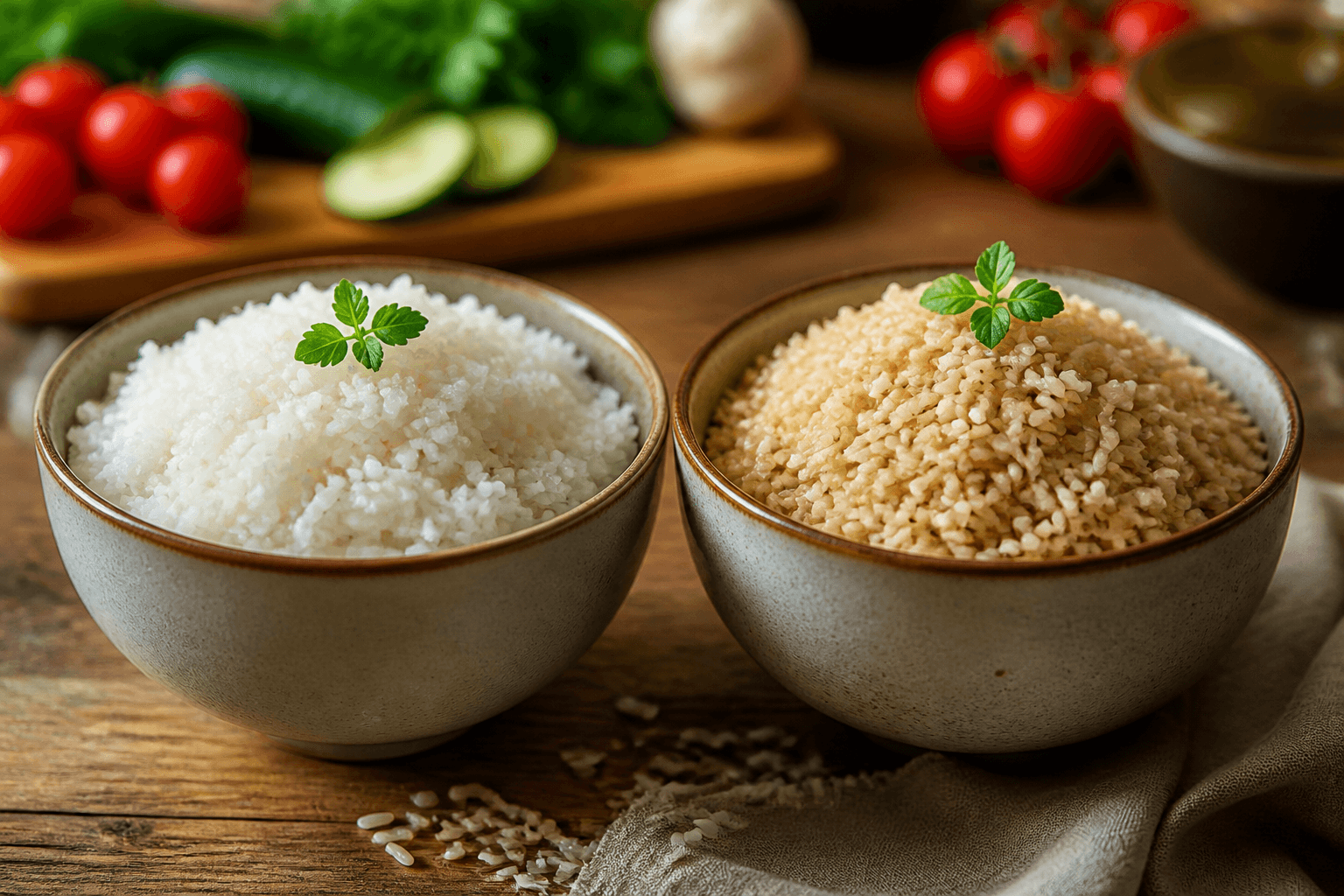
- rice
White Rice vs Brown Rice: Calories, Protein, and Which to Pick
Brown rice is slightly lower in calories than white rice, but the gap is small. Compare cooked portions, macros, and which one fits your goal at meals.
Oct 14, 20266 min read2 views
- calorie counting
Counting Calories on Holiday Without Obsessing
A practical travel logging routine for holidays: photo meals, correct portions, log beer or wine, and use day-by-day history instead of chasing perfect days.
Oct 4, 20268 min read2 views
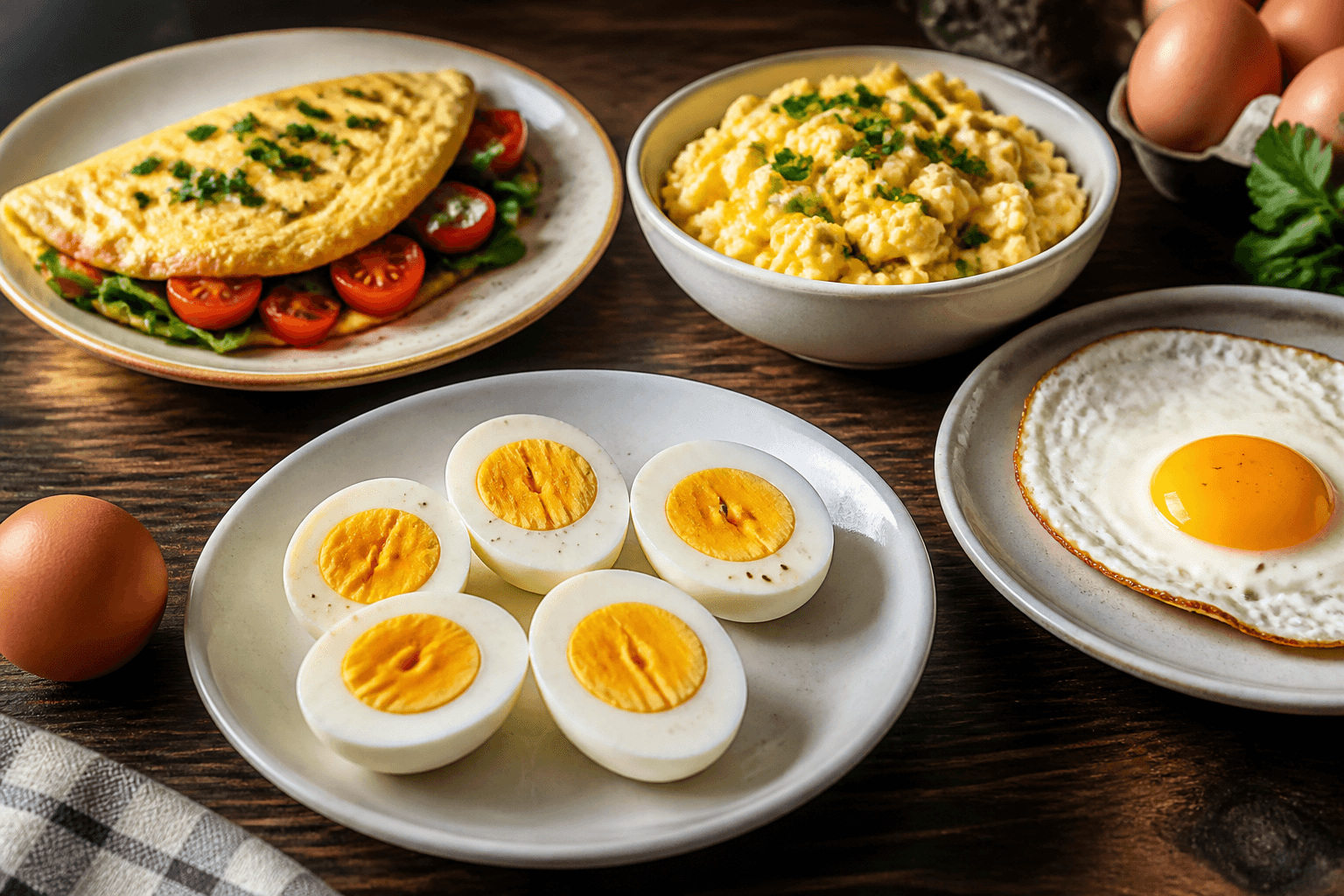
- eggs
Calories in Egg: Boiled, Fried, Scrambled and Omelette
One large egg has 78 kcal; 2 eggs have 155 kcal and 3 eggs have 233 kcal before cooking fat. Use the table to log each portion.
Oct 1, 20266 min read1 views
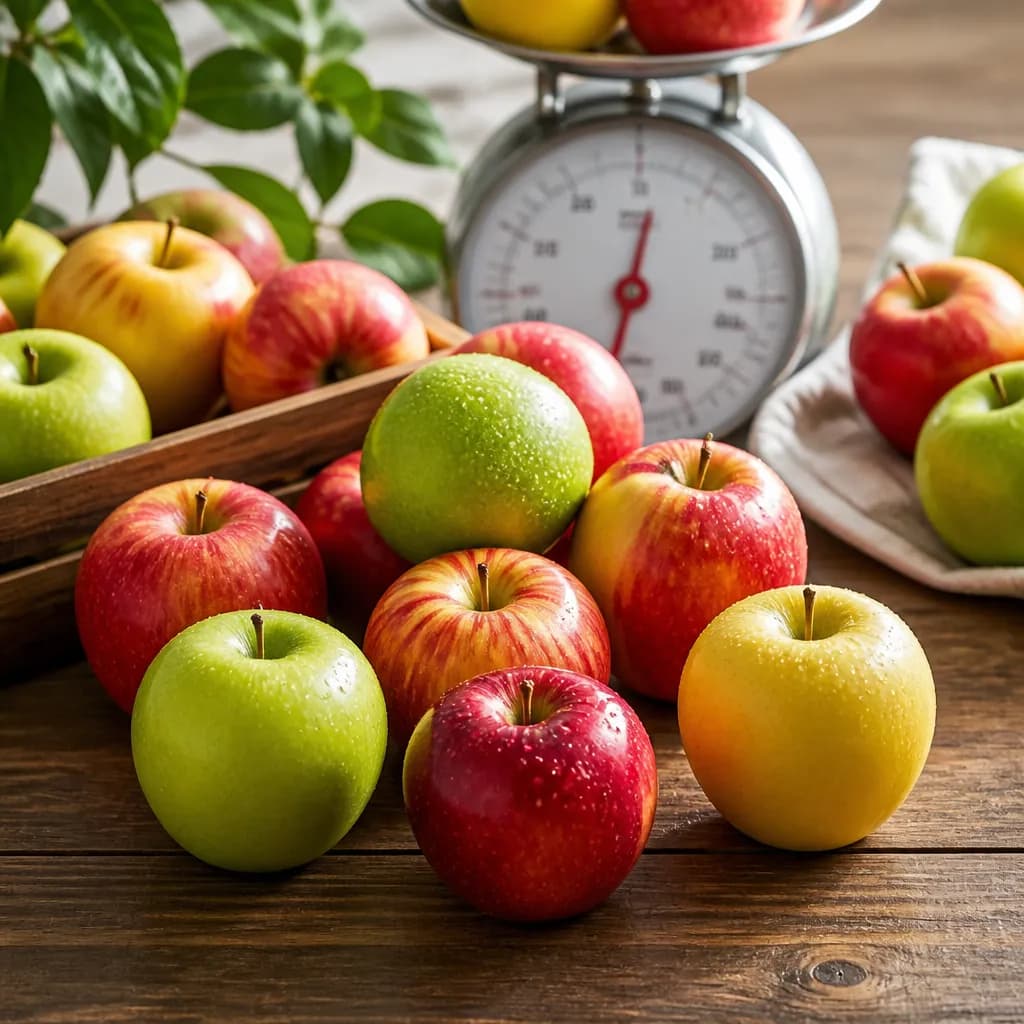
- nutrition
How Many Calories Are in an Apple? An In-Depth Look
Discover the calorie content of apples, their nutritional benefits, and how they fit into a balanced diet for health-conscious consumers.
Aug 21, 20265 min read6 views
- dehydration
Dehydration Loss of Appetite: How Not Drinking Enough Can Mute Hunger Signals
Dehydration loss of appetite is more common than many people realize. Learn how fluid balance affects hunger, digestion, and practical ways to tell thirst from true appetite.
Jun 15, 20266 min read5 views