How Many Calories Are in an Avocado?
Wondering about calories in avocado? This guide breaks down serving sizes, nutrition facts, health benefits, and easy ways to fit avocado into weight-conscious meals.
Calories in an Avocado: The Quick Answer
If you want the short version, the calories in avocado depend on size, but a medium avocado typically has about 240 to 250 calories. That number can look high at first glance, especially compared with lower-calorie fruits, but it reflects avocado’s rich fat content and dense nutrition.
A practical serving is often much smaller than a whole avocado. For example, 1/2 of a medium avocado usually lands around 120 calories, while 1/4 avocado is closer to 60 calories. If you are tracking intake for weight loss or macro balance, that difference matters more than most people realize.
Avocado Calories by Serving Size
Here’s a simple way to estimate calories in avocado without overthinking it. A standard Hass avocado weighs roughly 150 grams of edible flesh, and the entire fruit usually provides about 230 to 260 calories depending on exact size and ripeness. Smaller avocados may be closer to 200 calories, while larger ones can push above 300.
Use these rough serving estimates as a guide:
Why Avocado Is Calorie-Dense but Still Diet-Friendly
Avocados are calorie-dense because most of their energy comes from fat, but the fat is mostly monounsaturated fat, the same heart-friendly type often associated with olive oil and nuts. That makes avocado more satisfying than many low-fat foods, especially when you need a meal that keeps you full for hours.
For example, 1 tablespoon of avocado provides roughly 25 calories, 2 grams of fat, and very little sugar. Compare that with butter at about 100 calories per tablespoon, and you can see why avocado is often considered a smarter spread for people paying attention to calories and nutrition.
Nutrition Benefits Beyond the Calorie Count
The value of avocado goes far beyond calories in avocado. It delivers fiber, potassium, folate, vitamin K, vitamin E, and a range of plant compounds that support overall nutrition. A half avocado can provide around 5 to 7 grams of fiber, which helps with fullness and supports digestion.
That fiber is especially useful if you are building balanced meals for weight management. Pairing avocado with lean protein, such as eggs, chicken, tuna, or Greek yogurt, can make a meal more filling than eating carbs alone. If you want to learn more about nutrient-dense foods, see our guide to healthy fats for weight loss and high-protein meal ideas.
How to Fit Avocado into a Calorie-Conscious Meal Plan
The easiest way to use avocado without overshooting your calorie target is to treat it like a fat source, not a free add-on. In other words, if you add avocado to toast, salad, or a rice bowl, you may want to reduce another fat source such as cheese, mayonnaise, or oil-based dressing.
A realistic meal example: two slices of whole-grain toast, 1/2 avocado, and two eggs comes out to roughly 380 to 450 calories depending on bread size and egg preparation. That meal delivers healthy fats, protein, and fiber, which is often more satisfying than a pastry or sugary cereal for the same calorie range.
Best Serving Suggestions for Health-Conscious Eaters
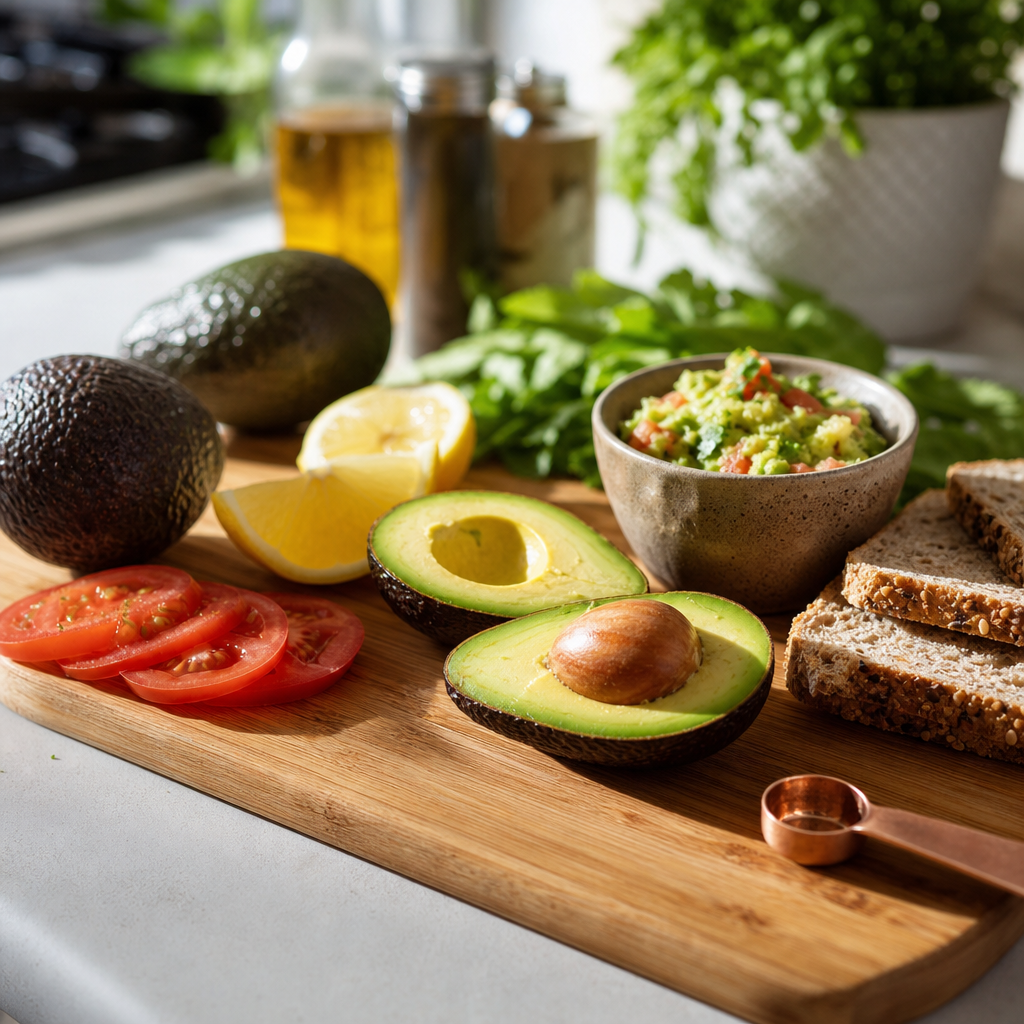
Avocado works best when it improves the quality of a meal rather than just adding extra calories. Try it sliced on toast with tomato and chili flakes, mashed into a wrap with turkey and greens, or diced into a salad with beans and grilled salmon. These combinations create better macro balance and make it easier to stay on track with fitness or weight loss goals.
A few easy portion-control ideas:
Use 1/4 avocado as a topping instead of the whole fruit
Swap avocado for mayo in sandwiches and wraps
Add avocado to meals that already contain protein and vegetables
Blend a small amount into smoothies for creaminess without added sugar
Measure avocado once or twice until your eye learns the portion size
Common Mistakes People Make with Avocado Calories
One common mistake is assuming that because avocado is healthy, the portion size does not matter. It absolutely does. A large avocado can add 300 calories to a meal very quickly, especially if you also use olive oil, cheese, nuts, or creamy dressing in the same dish.
Another issue is underestimating spreads and toppings. Half an avocado on toast may feel modest, but if you add a drizzle of oil, a handful of seeds, and a few slices of cheese, the calorie total can climb much faster than expected. If you’re tracking accurately, using food photo calorie tracking can help you log meals more consistently.
Real-World Calorie Math: Avocado in a Day of Eating
Let’s say you eat 1/2 avocado at breakfast on toast, which is about 120 calories. At lunch, you add 1/4 avocado to a salad for another 60 calories. By dinner, you have a burrito bowl with 1/4 avocado and total avocado intake for the day reaches about 180 calories.
That amount is perfectly reasonable for many people, especially if the rest of the day includes lean protein, vegetables, and mostly minimally processed foods. The key is not to fear avocado, but to count it the same way you would count nuts, cheese, or cooking oil. If you're trying to tighten your daily intake, checking how to estimate calories in mixed meals can make planning much easier.
Frequently Asked Questions
How many calories are in half an avocado?
Half a medium avocado usually contains about 120 calories, though the exact number depends on size. Smaller halves may be closer to 100 calories, while larger ones can be higher.
Is avocado good for weight loss?
Yes, avocado can support weight loss when used in the right portion. Its fiber and healthy fats help with fullness, but the calories in avocado still need to fit your overall daily intake.
How much avocado should I eat per day?
For many health-conscious eaters, 1/4 to 1/2 avocado per meal is a practical portion. The right amount depends on your calorie target, activity level, and the rest of your diet.
Is avocado lower in calories than butter or mayonnaise?
Yes, avocado is often a better choice than butter or mayonnaise for many meals. It has fewer calories per tablespoon than butter and brings more fiber and micronutrients than mayo.
Want to track the calories in avocado and every other meal faster? Use Cal AI to take a photo of your food, instantly estimate calories, view protein, carbs, and fat, analyze meals with AI, and track your nutrition goals more easily.
Share this article
Cal AI
Track meals faster with Cal AI
Scan food, estimate calories, and keep your nutrition log moving without typing every ingredient.
Author
Cal AI Editorial Team
Practical guides on nutrition, calorie tracking, meal planning, and building healthier habits with Cal AI.
Editorial policyFrequently asked questions
How many calories are in half an avocado?
Half a medium avocado usually contains about 120 calories, though the exact number depends on size. Smaller halves may be closer to 100 calories, while larger ones can be higher.
Is avocado good for weight loss?
Yes, avocado can support weight loss when used in the right portion. Its fiber and healthy fats help with fullness, but the calories in avocado still need to fit your overall daily intake.
How much avocado should I eat per day?
For many health-conscious eaters, 1/4 to 1/2 avocado per meal is a practical portion. The right amount depends on your calorie target, activity level, and the rest of your diet.
Is avocado lower in calories than butter or mayonnaise?
Yes, avocado is often a better choice than butter or mayonnaise for many meals. It has fewer calories per tablespoon than butter and brings more fiber and micronutrients than mayo.
Related articles
 Dehydration Loss of Appetite: How Not Drinking Enough Can Mute Hunger SignalsDehydration loss of appetite is more common than many people realize. Learn how fluid balance affects hunger, digestion, and practical ways to tell thirst from true appetite.
 How Many Calories Are in Chocolate? A Practical Guide to Dark, Milk, and White ChocolateWondering how many calories are in chocolate? This guide breaks down calories in chocolate by type, serving size, and cocoa content so you can enjoy it without guessing.
 How Many Calories Are in Cheese? A Practical Guide for Cheese LoversWondering how many calories are in cheese? This guide breaks down calories in cheese by type, serving size, and fat content so you can choose smarter portions without giving up flavor.
 How Many Calories Are in a Burger? A Practical Guide to calories in burger CountsBurger calories can swing wildly depending on patty size, cheese, sauces, and bun choice. Learn the typical calories in burger meals and how to estimate them fast.
 How Many Calories Are in Juice? A Practical Guide to Calories in JuiceJuice can look healthy, but the calorie count changes fast depending on the fruit, serving size, and whether sugar has been added. Here’s how to compare popular juices and make smarter choices.
 How Many Calories Are in Coca-Cola? A Practical Guide to Calories in Coca-ColaCoca-Cola’s calorie count is easy to underestimate, especially when portions get larger. Here’s a clear breakdown of calories in Coca-Cola, plus sugar, serving sizes, and better ways to fit soda into your day.
 Cal AI Free vs Premium: Which Version Fits Your Budget and Goals?A clear breakdown of Cal AI free vs premium, including features, limits, and real-life use cases so you can decide if the upgrade is worth it.