How Many Calories Are in Coca-Cola? A Practical Guide to Calories in Coca-Cola
Coca-Cola’s calorie count is easy to underestimate, especially when portions get larger. Here’s a clear breakdown of calories in Coca-Cola, plus sugar, serving sizes, and better ways to fit soda into your day.
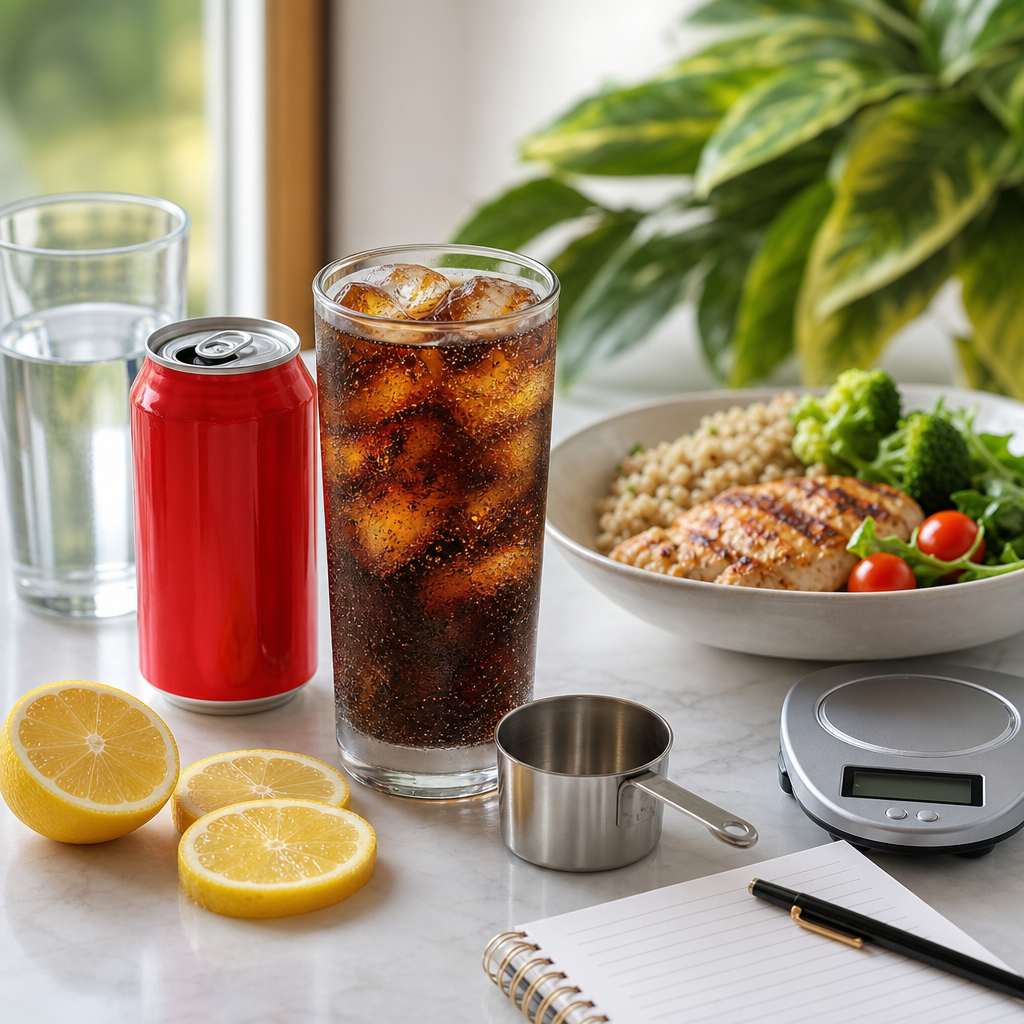
Calories in Coca-Cola by serving size
The most useful way to think about calories in Coca-Cola is by portion, because the number changes fast once the serving gets bigger. A standard 12-ounce can of Coca-Cola contains 140 calories. That same can also delivers about 39 grams of sugar, which is the main source of those calories.
If you pour Coca-Cola into a smaller glass, the calories drop in proportion. An 8-ounce serving has about 93 calories, while a 20-ounce bottle has roughly 240 calories. A 16.9-ounce bottle lands around 200 calories. If you are casually sipping from a large bottle, it is easy to drink the equivalent of two cans without noticing.
What those calories mean nutritionally
The calories in Coca-Cola come almost entirely from added sugar, not protein, fat, or fiber. That means it provides energy, but very little satiety. In practical terms, a soda can add calories without helping you feel full the way a snack with protein or fiber might.
Here is the rough nutrition picture for a 12-ounce serving: 140 calories, 39 grams of sugar, 0 grams of fat, 0 grams of protein, and 45 milligrams of sodium. For comparison, that sugar load is about 9.75 teaspoons. If you are tracking nutrition for fat loss or general health, this matters because liquid calories tend to be easier to overlook than calories from food. For more beverage comparisons, see how many calories are in diet soda and high-calorie drinks to watch.
Why the calorie count adds up so quickly
Coca-Cola may not seem like a big calorie source until you look at real-world habits. A single can with lunch is 140 calories. Add one more with dinner, and you are at 280 calories. Over a week, that is 980 calories from soda alone. Over a month, it is more than 4,000 calories, which is roughly enough energy to equal well over a pound of body fat if not balanced elsewhere in your diet.
This is where many people get caught off guard: soda rarely feels like a meal, so it does not trigger the same awareness as food. If you also grab fries, a burger, or a sweet snack, the beverage can become a hidden multiplier. The calorie impact is even greater when you choose fountain drinks, which are often served in 16, 20, or 32-ounce portions. A 32-ounce fountain soda can deliver around 370 calories or more, depending on the exact pour.
Calories in Coca-Cola compared with similar drinks
It helps to compare Coca-Cola with other popular beverages. A regular 12-ounce Coca-Cola has 140 calories, while many fruit juices sit in a similar or even higher range. For example, orange juice can have about 110 calories per 8 ounces, and sweet tea often ranges from 90 to 150 calories depending on sugar levels. Energy drinks, milkshakes, and coffeehouse beverages can be much higher.
The key difference is perception. People often treat juice as a “natural” choice and soda as the obvious indulgence, but calorie-wise, both can be significant. If you are deciding what fits your day, ask whether the drink is adding hydration, protein, or micronutrients. Water, unsweetened tea, and black coffee offer far fewer calories per serving. For a deeper look at beverage choices, check healthy drink swaps for weight loss and best low-calorie drinks.
How Coca-Cola fits into a weight loss or fitness plan
If you are cutting calories for weight loss, the question is not whether you can ever drink Coca-Cola. It is how often and in what portion. One can a day adds 980 calories per week, but one can a few times a week may be easier to fit into a calorie budget. The difference between maintaining progress and stalling often comes down to frequency, not a single serving.
For example, suppose your daily fat-loss target is 1,800 calories. If you drink one 12-ounce Coca-Cola with lunch, you have used 140 calories, or almost 8% of your total day, on a beverage with no protein or fiber. That is not automatically bad, but it means you need to be more intentional with the rest of your meals. A breakfast with eggs, Greek yogurt, or oatmeal would generally support fullness better than spending those calories on soda.
Smarter ways to enjoy Coca-Cola without overdoing calories
If Coca-Cola is part of your routine, you do not necessarily need to quit completely. A few practical strategies can keep the calories in Coca-Cola from working against your goals. The biggest wins usually come from portion control and frequency control, not perfection.
Try these simple approaches:
- Choose a 7.5-ounce mini can instead of a full 12-ounce can when you just want the taste.
- Pair soda with a higher-protein meal so you are not using drinks to fill you up.
- Save Coca-Cola for specific occasions instead of making it your default beverage.
- Drink water first, then decide if you still want soda.
- If you are tracking intake, log the drink immediately so the calories do not disappear from your mental math.
A useful real-world example: replacing one 20-ounce Coke (about 240 calories) with sparkling water and lemon five days a week saves around 1,200 calories weekly. That alone could meaningfully support steady fat loss over time. The same logic applies if you are maintaining weight and simply want more room for nutrient-dense foods.
The bottom line on Coca-Cola and nutrition
Coca-Cola is not just a “small treat” when portions get larger. The calories in Coca-Cola range from about 93 calories in an 8-ounce serving to around 240 calories in a 20-ounce bottle, and the sugar climbs along with it. Because the drink is low in protein, fiber, and micronutrients, it contributes energy without much fullness or nutritional payoff.
That does not mean it has no place in a balanced diet. It means the best approach is awareness. If you know the calorie cost, you can decide whether the drink is worth it in that moment. For some people, that means enjoying a can occasionally. For others, it means choosing lower-calorie beverages most of the time and keeping soda for social settings or planned treats.
Frequently Asked Questions
How many calories are in a 12-ounce Coca-Cola?
A standard 12-ounce can of Coca-Cola has 140 calories and about 39 grams of sugar.
How many calories are in a 20-ounce bottle of Coca-Cola?
A 20-ounce bottle of Coca-Cola has about 240 calories, though exact amounts can vary slightly by product and market.
Is Coca-Cola bad for weight loss?
Not automatically, but it can make fat loss harder if you drink it often because it adds calories without much fullness. Portion size matters a lot.
Does Coca-Cola have any protein or fat?
No. Regular Coca-Cola has 0 grams of protein and 0 grams of fat. Most of its calories come from sugar.
What is a better option if I still want soda flavor?
Smaller portions, sparkling water, or zero-calorie soda options can reduce your calorie intake while still giving you a fizzy drink experience.
Want an easier way to track drinks and meals? Use Cal AI to take a photo of your food, instantly estimate calories, view protein, carbs, and fat, analyze meals with AI, and track nutrition goals more easily.
Share this article
Cal AI
Track meals faster with Cal AI
Scan food, estimate calories, and keep your nutrition log moving without typing every ingredient.
Author
Cal AI Editorial Team
Practical guides on nutrition, calorie tracking, meal planning, and building healthier habits with Cal AI.
Editorial policyFrequently asked questions
How many calories are in a 12-ounce Coca-Cola?
A standard 12-ounce can of Coca-Cola has 140 calories and about 39 grams of sugar.
How many calories are in a 20-ounce bottle of Coca-Cola?
A 20-ounce bottle of Coca-Cola has about 240 calories, though exact amounts can vary slightly by product and market.
Is Coca-Cola bad for weight loss?
Not automatically, but it can make fat loss harder if you drink it often because it adds calories without much fullness. Portion size matters a lot.
Does Coca-Cola have any protein or fat?
No. Regular Coca-Cola has 0 grams of protein and 0 grams of fat. Most of its calories come from sugar.
What is a better option if I still want soda flavor?
Smaller portions, sparkling water, or zero-calorie soda options can reduce your calorie intake while still giving you a fizzy drink experience.
Related articles
 How Many Calories Are in Juice? A Practical Guide to Calories in JuiceJuice can look healthy, but the calorie count changes fast depending on the fruit, serving size, and whether sugar has been added. Here’s how to compare popular juices and make smarter choices.
 Cal AI Free vs Premium: Which Version Fits Your Budget and Goals?A clear breakdown of Cal AI free vs premium, including features, limits, and real-life use cases so you can decide if the upgrade is worth it.