How Many Calories Are in Juice? A Practical Guide to Calories in Juice
Juice can look healthy, but the calorie count changes fast depending on the fruit, serving size, and whether sugar has been added. Here’s how to compare popular juices and make smarter choices.
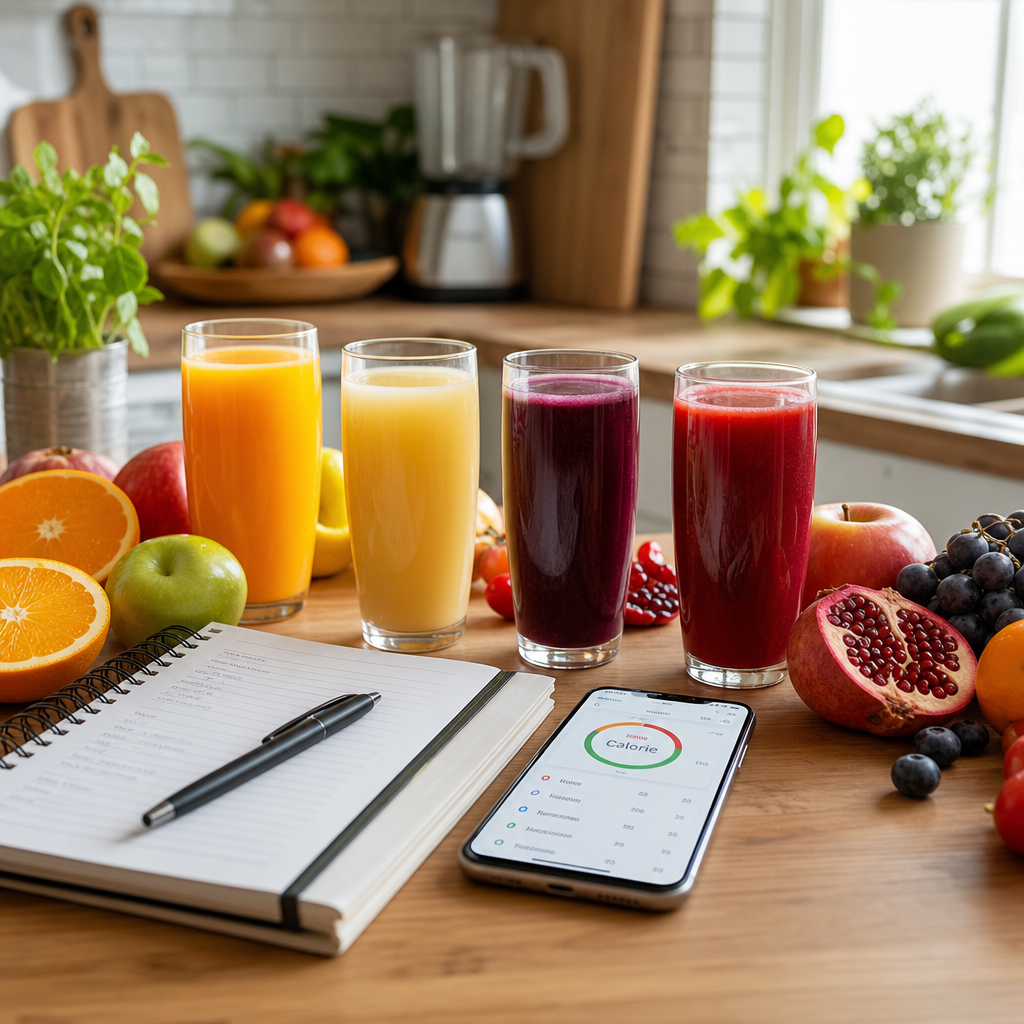
Juice calories: why the numbers vary so much
The calories in juice depend on more than just the fruit name. A 100% juice with no added sugar will still vary a lot because some fruits are naturally much sweeter and more concentrated than others. Orange juice, apple juice, grape juice, and pomegranate juice can all be “healthy,” yet their calorie totals per cup are not the same.
Serving size matters just as much. A small 4-ounce glass may contain around 50 to 70 calories, while a full 12-ounce bottle can easily climb past 150 to 200 calories. That gap is one reason people underestimate juice when tracking weight loss or daily calorie intake. If you want a broader view of beverage choices, it helps to compare juice with low-calorie drinks and how to read food labels.
Calories in popular fruit juices: a quick comparison
Here’s a practical snapshot of typical calorie counts for 8-ounce servings of common juices:
- Orange juice: about 110 calories
- Apple juice: about 114 calories
- Grape juice: about 150 calories
- Cranberry juice cocktail: about 120 to 140 calories
- Pomegranate juice: about 130 to 160 calories
- Pineapple juice: about 130 calories
- Grapefruit juice: about 95 calories
The spread is bigger than many people expect. Grapefruit juice often lands lower, while grape and pomegranate juice tend to be more calorie-dense. If you pour 12 ounces instead of 8, just multiply the numbers by 1.5. That means a 12-ounce glass of apple juice may be around 170 calories, and grape juice can approach 225 calories. For someone trying to maintain a calorie deficit, that can be the difference between a balanced snack and an extra meal’s worth of liquid calories over the course of a week.
What the calories come with: sugar, carbs, and micronutrients
The calories in juice usually come almost entirely from carbohydrates, mainly natural sugars. An 8-ounce serving of orange juice typically has about 26 grams of carbs, while apple juice may have around 28 to 30 grams. Grape juice can climb to 36 grams or more per cup. That’s why juice can raise blood sugar quickly, especially when consumed without protein, fiber, or fat to slow digestion.
At the same time, juice is not nutritionally empty. Many juices provide vitamin C, potassium, folate, and antioxidants. Orange juice is a notable source of vitamin C, while pomegranate juice offers polyphenols. The downside is that juicing removes most of the fiber found in whole fruit, which is one of the biggest advantages of eating fruit rather than drinking it. If you’re comparing options for fullness and weight control, whole fruit vs juice is one of the most important nutrition comparisons to understand.
Juice, weight loss, and appetite: why liquid calories are tricky
Liquid calories are easier to overlook because they don’t create the same fullness as chewing food. A 150-calorie glass of juice may satisfy your taste buds for five minutes, but it usually won’t keep you full the way a 150-calorie snack like Greek yogurt or an apple with peanut butter might. That matters if you’re trying to lose weight or maintain a steady energy intake.
A simple real-world example: if you drink one 8-ounce glass of juice each morning at 110 calories, that adds up to 770 calories per week. Swap that for water, sparkling water, or unsweetened tea, and you can “save” enough calories to make room for a more filling lunch or dinner. For active people, juice can still fit, but it’s better treated as a planned carbohydrate source than a casual default drink.
Best ways to fit juice into a healthy diet
You do not have to ban juice to eat well. The key is choosing the right portion and pairing it strategically. A small 4- to 6-ounce serving can be enough to enjoy the flavor and nutrients without turning juice into a calorie-heavy habit. If you want to keep the calorie count under control, dilute juice with sparkling water or plain water for a lighter drink that still tastes fresh.
A few practical ways to use juice wisely:
- Choose 100% juice instead of juice cocktails when possible
- Stick to 4 to 8 ounces per serving
- Pair juice with protein-rich food, such as eggs or yogurt
- Use juice around workouts if you need quick carbs
- Check the label for added sugars and “juice drinks” that are mostly sweetened water
This approach works especially well for people who track macros. For example, an 8-ounce orange juice with about 26 grams of carbs may fit nicely into a breakfast plan that also includes eggs and oatmeal. But if you’re already consuming a high-carb meal, juice can push the total up faster than expected.
How juice compares with smoothies, soda, and whole fruit
Juice often gets compared with other beverages, but the differences are important. Soda usually contains similar or higher calories than juice, but with little to no micronutrient value. A regular 12-ounce soda can easily deliver around 140 to 170 calories, almost entirely from added sugar. Juice may be more nutrient-rich, but the calorie count can still be just as relevant for weight loss.
Smoothies can be more filling than juice because they often retain fiber, especially when made with whole fruit, seeds, or vegetables. But smoothies can also become calorie bombs when they include nut butter, sweetened yogurt, honey, or large fruit portions. Whole fruit remains the best option for satiety because fiber slows digestion and helps control hunger. If you’re building a smarter beverage routine, this comparison is worth remembering: juice is usually better than soda, but whole fruit is usually better than juice.
A smarter way to count juice calories without getting lost in the details
When you’re tracking calories in juice, accuracy comes from two habits: read the serving size and check whether the label says 100% juice, juice blend, or juice cocktail. A bottle may list 110 calories per 8 ounces, but if the package contains 16 ounces, you’re really drinking 220 calories. That mistake is common and easy to make when pouring straight from the bottle.
If you’re using calorie tracking for weight loss, think in weekly patterns instead of one-off drinks. One glass of juice now and then is not the issue. The issue is when juice becomes an automatic add-on at breakfast, lunch, and after workouts. Replacing just one daily 8-ounce serving with water or a lower-calorie beverage can create a meaningful calorie gap over time, without feeling restrictive. For more food and drink strategy, see high-protein snacks and calorie deficit basics.
Frequently Asked Questions
How many calories are in 8 ounces of juice?
Most 8-ounce servings of 100% fruit juice fall between about 95 and 160 calories, depending on the fruit. Grapefruit juice is often lower, while grape and pomegranate juice tend to be higher.
Is juice healthy if it has no added sugar?
100% juice can provide vitamins and antioxidants, but it still contains natural sugar and very little fiber. It can be part of a healthy diet, but portion size matters.
Is juice better than soda for weight loss?
Usually yes, because juice provides more nutrients. But from a calorie perspective, both can add up quickly, so juice should still be limited if you are trying to lose weight.
Can I drink juice every day?
Yes, if it fits your calorie and carb goals. A small portion, such as 4 to 6 ounces, is easier to manage than a full large glass or bottle.
What is the lowest-calorie fruit juice?
Among common options, grapefruit juice is often one of the lower-calorie choices, usually around 90 to 100 calories per 8 ounces, though exact values vary by brand.
Want an easier way to track juice and meals? Use Cal AI to take a photo of your food, instantly estimate calories, view protein, carbs, and fat, analyze meals with AI, and track your nutrition goals more easily.
Share this article
Cal AI
Track meals faster with Cal AI
Scan food, estimate calories, and keep your nutrition log moving without typing every ingredient.
Author
Cal AI Editorial Team
Practical guides on nutrition, calorie tracking, meal planning, and building healthier habits with Cal AI.
Editorial policyFrequently asked questions
How many calories are in 8 ounces of juice?
Most 8-ounce servings of 100% fruit juice fall between about 95 and 160 calories, depending on the fruit. Grapefruit juice is often lower, while grape and pomegranate juice tend to be higher.
Is juice healthy if it has no added sugar?
100% juice can provide vitamins and antioxidants, but it still contains natural sugar and very little fiber. It can be part of a healthy diet, but portion size matters.
Is juice better than soda for weight loss?
Usually yes, because juice provides more nutrients. But from a calorie perspective, both can add up quickly, so juice should still be limited if you are trying to lose weight.
Can I drink juice every day?
Yes, if it fits your calorie and carb goals. A small portion, such as 4 to 6 ounces, is easier to manage than a full large glass or bottle.
What is the lowest-calorie fruit juice?
Among common options, grapefruit juice is often one of the lower-calorie choices, usually around 90 to 100 calories per 8 ounces, though exact values vary by brand.
Related articles
 How Many Calories Are in Cheese? A Practical Guide for Cheese LoversWondering how many calories are in cheese? This guide breaks down calories in cheese by type, serving size, and fat content so you can choose smarter portions without giving up flavor.
 How Many Calories Are in a Burger? A Practical Guide to calories in burger CountsBurger calories can swing wildly depending on patty size, cheese, sauces, and bun choice. Learn the typical calories in burger meals and how to estimate them fast.
 How Many Calories Are in Coca-Cola? A Practical Guide to Calories in Coca-ColaCoca-Cola’s calorie count is easy to underestimate, especially when portions get larger. Here’s a clear breakdown of calories in Coca-Cola, plus sugar, serving sizes, and better ways to fit soda into your day.
 Cal AI Free vs Premium: Which Version Fits Your Budget and Goals?A clear breakdown of Cal AI free vs premium, including features, limits, and real-life use cases so you can decide if the upgrade is worth it.