How AI Recognizes Food: The Technology Behind the Magic
Discover the intricate processes that allow AI to recognize food items in images, from deep learning models to real-world applications.
Updated Oct 17, 20265 min read29 views
In this guide
Introduction to Food Recognition Technology
Food recognition involves using artificial intelligence (AI) technologies to identify and classify various food items from images. This capability combines several advanced technological realms, including machine learning, computer vision, and data analytics, to enhance our interaction with food. Understanding how AI recognizes food not only sheds light on the technology that underpins this functionality but also reveals its practical applications in our daily lives.
From nutritional tracking to enhanced consumer experiences at restaurants, the ability of AI to recognize food is reshaping industries. In this article, we will explore the processes, technologies, and real-world applications that make food recognition possible.
How Does AI Recognize Food? The Process Explained
The journey of AI recognizing food typically starts with data collection and preprocessing. Large datasets containing images of food—each labeled with its corresponding name or category—are essential for training AI models. For instance, a model may receive thousands of images of apples, each captured from various angles and under different lighting conditions. This diversity ensures the AI can learn the unique features that define an apple regardless of context.
Once the data is collected, it undergoes preprocessing to normalize it for training. This might include resizing images, adjusting color balances, and converting them into a format suitable for machine learning. After preprocessing, the training phase begins, utilizing various algorithms and architectures such as convolutional neural networks (CNNs) that excel in image classification tasks.
Deep Learning and Neural Networks in Food Recognition
Deep learning, a subset of machine learning, plays a pivotal role in how AI recognizes food. Neural networks, particularly CNNs, are designed to autonomously learn features from raw input data, such as images. Each layer of the neural network processes the image, extracting features from simple to complex, starting from edges and textures to intricate patterns that define a food item.
For example, a CNN trained to recognize pizzas might learn to identify the crust, cheese, and toppings at various depths. As the model progresses through its layers, it increasingly improves its accuracy by refining its understanding of what makes a pizza distinct compared to other food items, such as a sandwich or salad.
Real-World Applications of Food Recognition AI
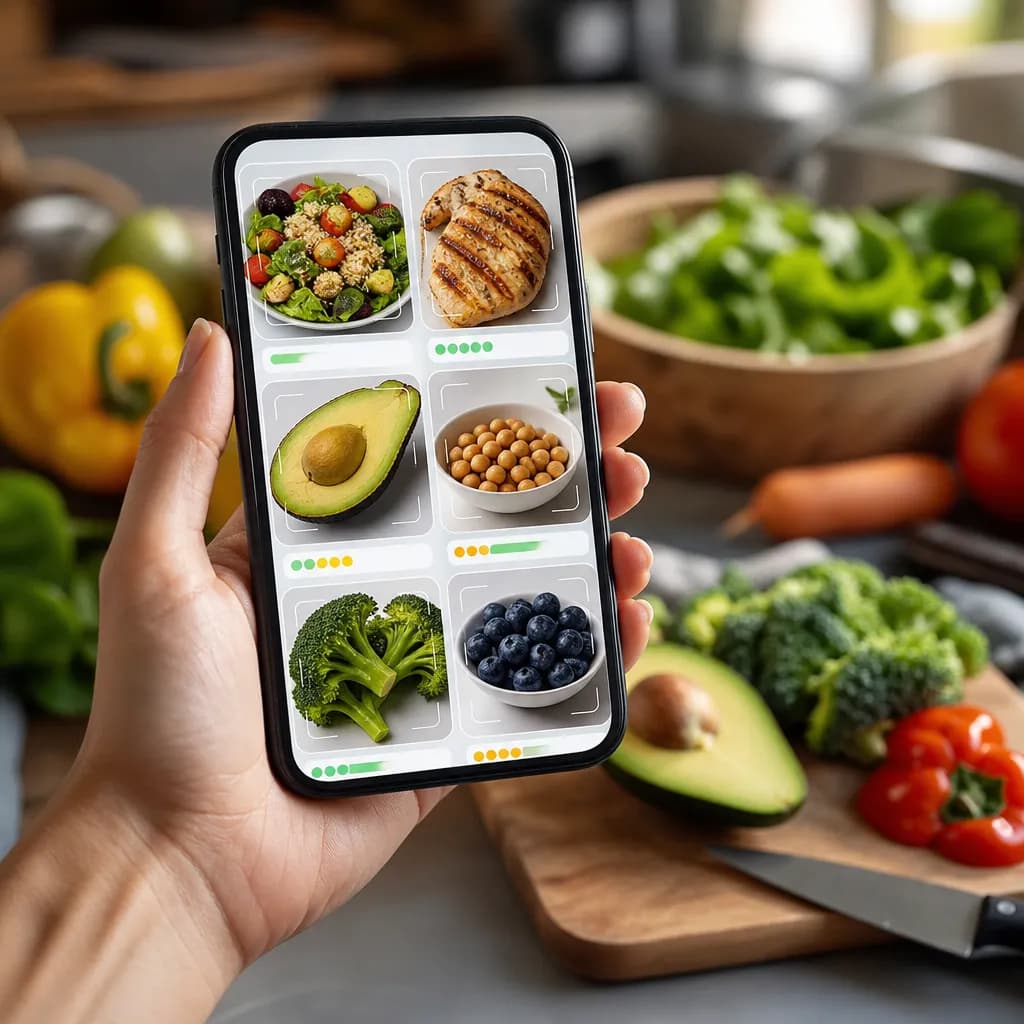
The practical applications of AI recognizing food are vast and impactful. One notable example is in health and nutrition. Applications like MyFitnessPal use AI to analyze food images uploaded by users, providing instant caloric and nutritional breakdowns. Users can take a photo of their meal, and within seconds, the app identifies the food items and aggregates their respective nutritional values. This eases the tracking of daily caloric intake, supporting weight management and healthier eating habits.
Additionally, AI food recognition is leveraged in the food service industry. Restaurants can deploy AI-powered chatbots that help customers select dishes by recognizing preferences through image uploads. This not only enhances customer satisfaction but also streamlines meal recommendations, leading to increased sales and a more personalized dining experience.
Challenges in Food Recognition Technology
Despite the advancements, AI food recognition still faces several challenges. One significant issue is variability in food presentation; the same dish can look drastically different depending on how it's plated. For instance, a spaghetti bolognese can come topped with cheese, served watery, or garnished, making it challenging for an AI model to identify it consistently.
Another challenge lies in cultural diversity. Different cultures present similar food items in unique ways, making their recognition more difficult. For instance, an AI trained primarily on Western cuisine may struggle to recognize Asian dishes due to differences in ingredients and presentation. Addressing these challenges requires continuous training with diverse datasets that represent global food varieties.
The Future of AI in Food Recognition
The future of AI recognizing food holds exciting potential as the technology continues to evolve. With ongoing advancements in AI, such as improved algorithms and larger training datasets, we can expect more precise and contextually aware food recognition systems. Imagine smart refrigerators that can scan items as you load them in, tracking freshness and providing recipe suggestions based on available ingredients.
Moreover, integrating augmented reality (AR) with AI food recognition can lead to compelling applications. For instance, imagine pointing your smartphone at a food item and receiving real-time nutritional information, recipe ideas, and even sourcing options. This blend of AI, AR, and health awareness could revolutionize how we interact with food technology.
Conclusion
As we move towards a more AI-integrated world, the ability of AI to recognize food will only become more prevalent and sophisticated. From aiding in health management to revolutionizing the culinary experience, the possibilities are expansive. Understanding these underlying technologies not only enhances our appreciation for what AI can accomplish but also prepares us for a future where food technology is the norm rather than the exception.
By embracing this innovation, we not only improve our daily interactions with food but also empower ourselves with knowledge that can lead to healthier dietary choices.
Frequently Asked Questions
How accurate is AI food recognition?
The accuracy of AI food recognition can vary widely depending on the quality of the training data and the complexity of the food items. Current models can achieve accuracy rates of over 80% on standard food datasets.
What technologies are used in food recognition?
Food recognition primarily utilizes machine learning techniques, particularly deep learning with convolutional neural networks (CNNs). These technologies enable the system to analyze and classify food images effectively.
Can AI recognize homemade dishes?
AI can recognize homemade dishes, but its accuracy may decrease if the dish hasn't been included in the training dataset. Continuous learning and expanding the dataset can improve recognition abilities.
What are the benefits of using AI food recognition apps?
AI food recognition apps offer various benefits, including easier dietary tracking, personalized meal recommendations, and accessibility for users managing specific health conditions.
Is AI food recognition reliable for nutrition tracking?
While AI food recognition can provide reliable estimates for calorie and nutrient intake, it's essential to verify the accuracy and ensure a comprehensive understanding of dietary requirements.
Discover how Cal AI can simplify your nutrition tracking! Take a photo of your food, instantly estimate calories, and analyze meals effortlessly. Begin your journey towards better nutrition management today!
Topics
Frequently asked questions
How accurate is AI food recognition?
The accuracy of AI food recognition can vary widely depending on the quality of the training data and the complexity of the food items. Current models can achieve accuracy rates of over 80% on standard food datasets.
What technologies are used in food recognition?
Food recognition primarily utilizes machine learning techniques, particularly deep learning with convolutional neural networks (CNNs). These technologies enable the system to analyze and classify food images effectively.
Can AI recognize homemade dishes?
AI can recognize homemade dishes, but its accuracy may decrease if the dish hasn't been included in the training dataset. Continuous learning and expanding the dataset can improve recognition abilities.
What are the benefits of using AI food recognition apps?
AI food recognition apps offer various benefits, including easier dietary tracking, personalized meal recommendations, and accessibility for users managing specific health conditions.
Is AI food recognition reliable for nutrition tracking?
While AI food recognition can provide reliable estimates for calorie and nutrient intake, it's essential to verify the accuracy and ensure a comprehensive understanding of dietary requirements.
Cal AI Editorial Team
Practical guides on nutrition, calorie tracking, meal planning, and building healthier habits with Cal AI.
Editorial policyRelated articles
- AI
How AI Calorie Counting Works: Unpacking the Technology Behind the Algorithm
Jun 26, 20265 min read14 views